Selection of Key Factors:
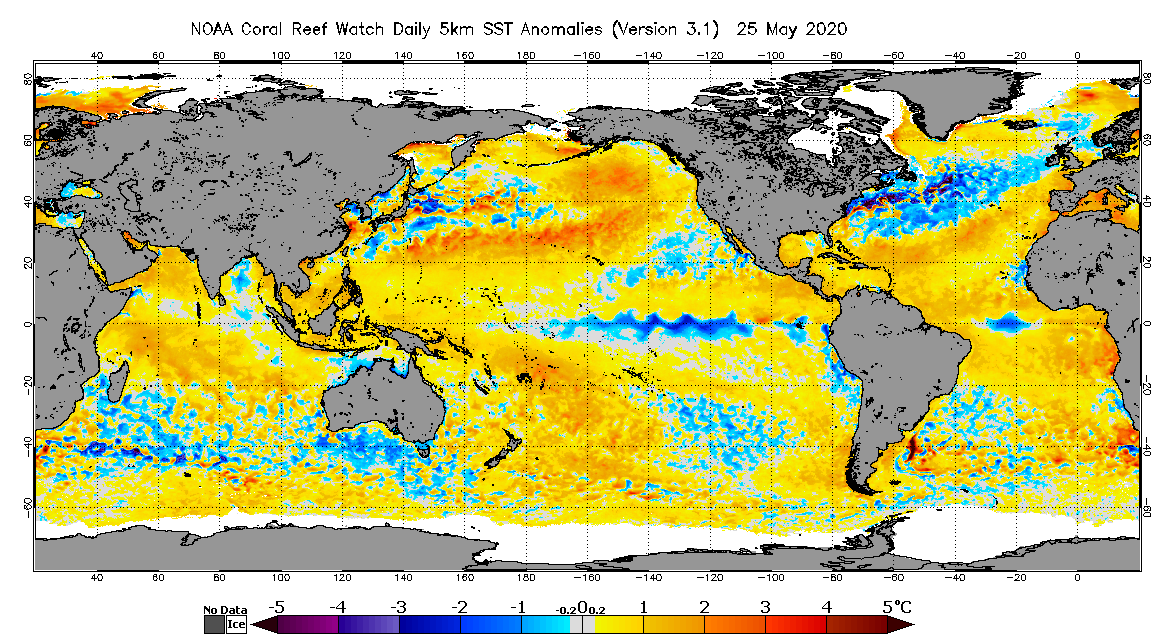
The SSTA paradigm extant is indicative of high oceanic heat content and off-equator warmth throughout the Pacific Ocean:
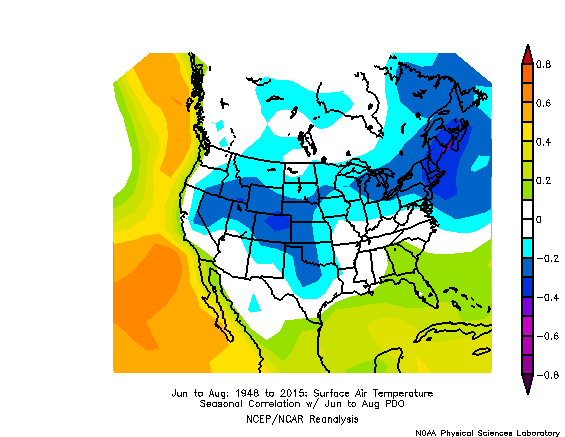
There is a fairly robust inverse correlation between PDO values and summer temperatures in the Northeast US, implicating that warmer waters across the East Pacific tend to force enhanced troughiness in the Northeast US.
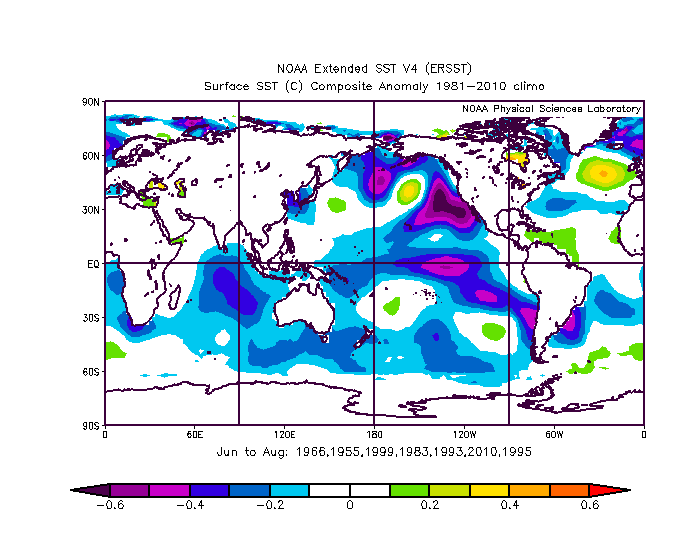
The “hot summer” SSTA composite again, strongly indicate that there is a propensity for negative PDO/hot summer variables to coincide. Negative PDO signal operates to retard momentum in the off-equator regions.
While analogs are quite sparse for the ensuing summer, subseasonal tropical forcing will likely follow a similar (overall) progression to 2007, with heightened prevalence in octants 1-2 (West-Central Indian Ocean):
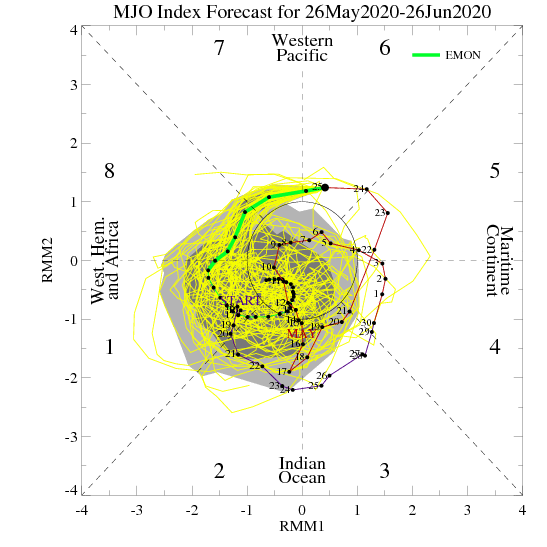
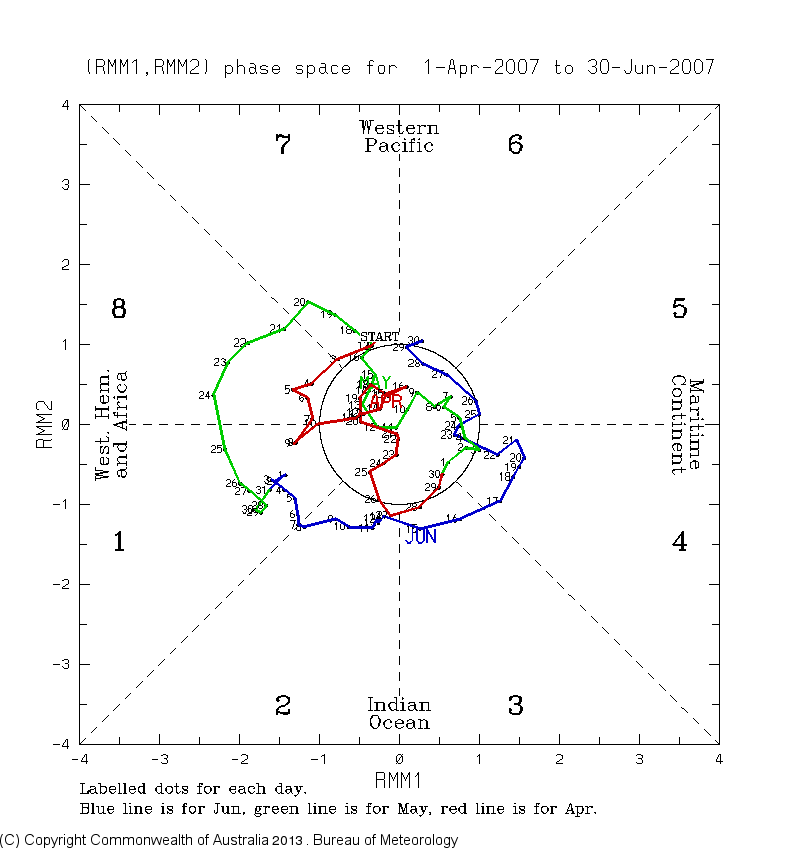
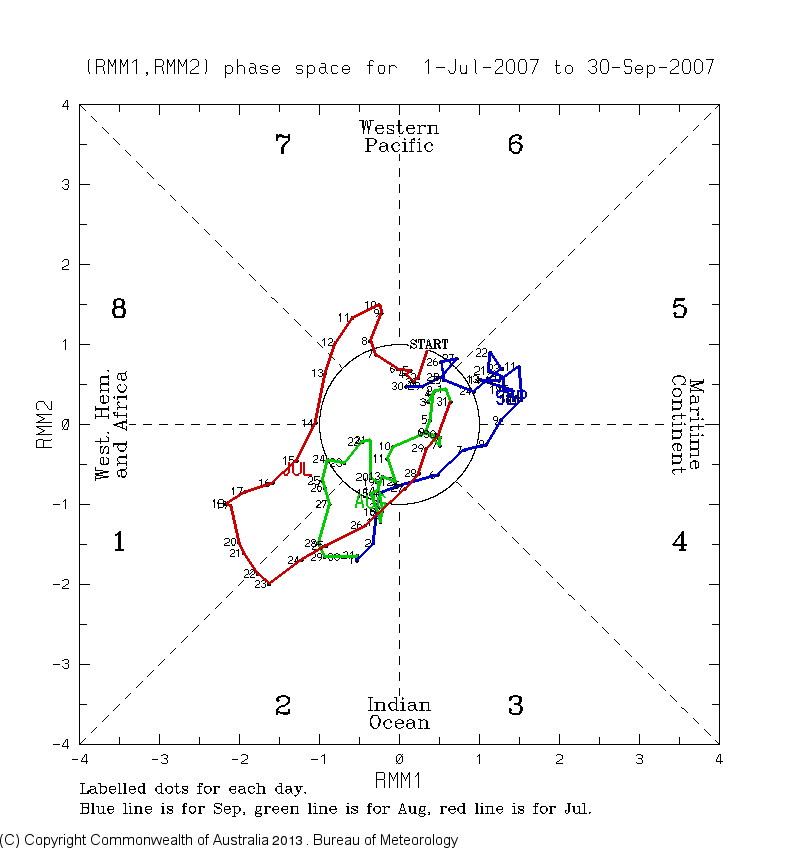
However, juxtaposed with 2007, the magnitude of NHEM blocking will be less. The present QBO transition / easterly shear stress descent is propagating much slower versus 2007. The resultant z500 will more likely feature increased geopotential heights in the NPAC, courtesy of tropical forcing and SSTA feedback, negative to neutral AO, and overall neutral NAO w/ episodic propensities of both negative and positive cycling.
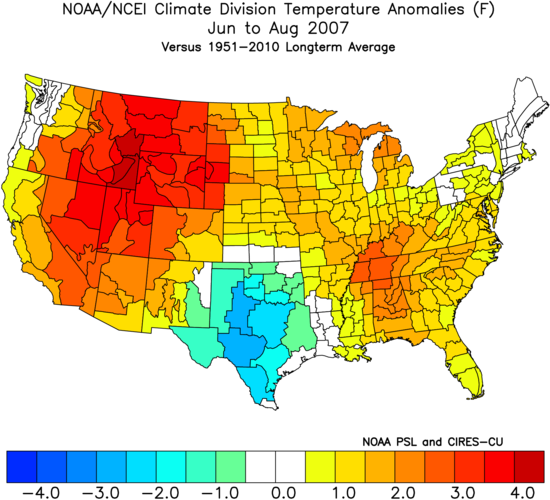
For reference: 2007 JJA temperature departures [note, again, this is merely an analog – not an identical progression anticipated]. Momentum is higher than 2007, QBO progression is disparate, among other, heterogeneous variables. As it pertains to timing, the favored progression is warmer front half [relative to normal] and not nearly as warm [relative to normal] August. An early, invigorating cool shot in early June should gradually acquiesce to inchoate ridging across the Central US, bleeding into the Eastern US as mid-month approaches.
Forecast/Outlook for NYC-NJ Region:
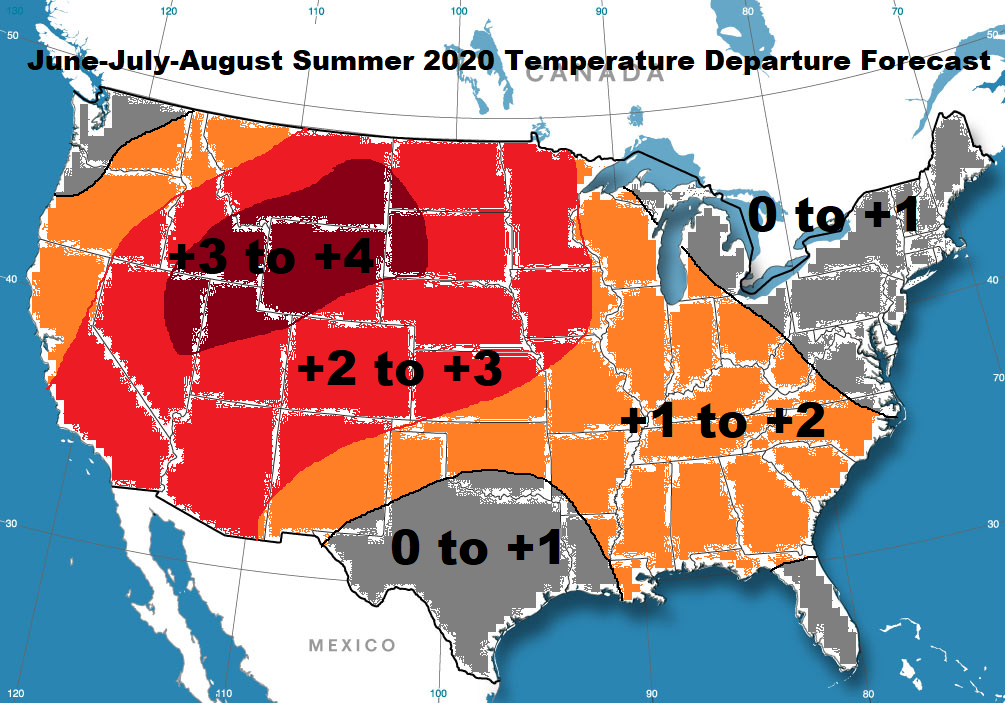
June-July-August Temperature Departures = Near to slightly warmer than normal, 0 to +1
Favored Progression [this timing is lower confidence than usual, particularly July-August] :
+0.5 to +1.5 June ::::: +0.5 to +1.5 July ::::: 0 to -1 August.
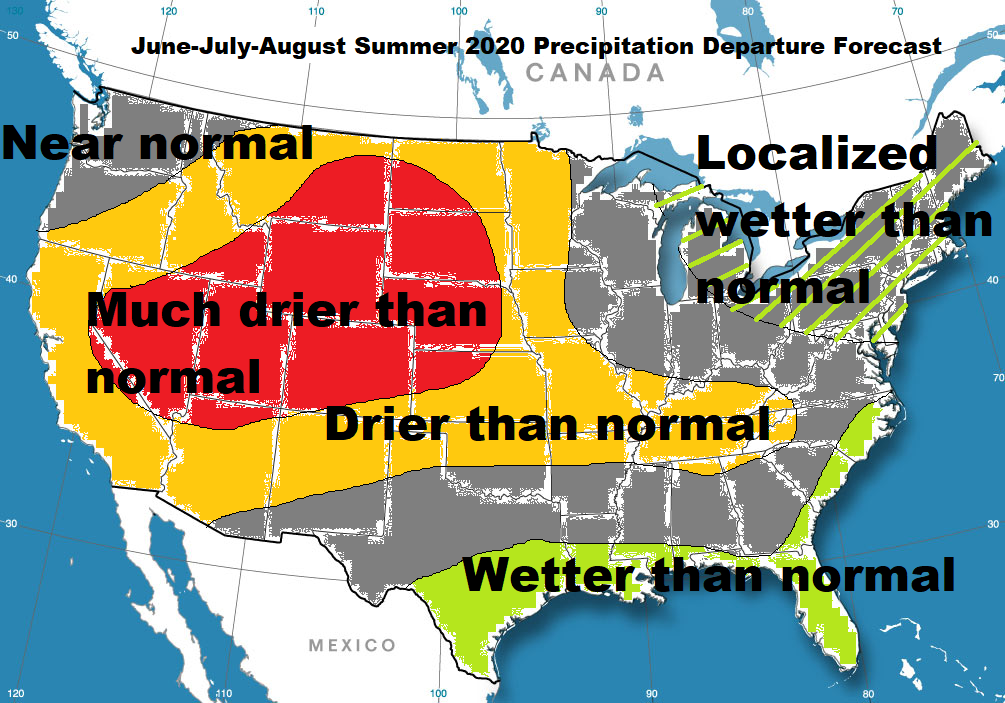
June-July-August Precipitation Departures = Near Normal [localized areas of above normal via Thunderstorms]. The anticipated z500 may presage semi-frequent bouts of NWLY flow frontal passages through the Northeast. This may imply a near to more active than usual convective season.
United States: A warm to very warm summer is on the way for the vast majority of the United States.
Maps: Note that the mean z500 is expected to be redolent of a mid/upper ridge off the West Coast, trough near/west of the Pac NW Coast, ridge axis downstream near the Rockies, and a trough approximately near Newfoundland. The precipitation forecast reflects a more active than usual hurricane season along the Gulf and SE US coast. The Northeast US “hashed” contours reflects lower confidence – mostly near normal precipitation with localized wetter than normal via convection.
VERIFICATION
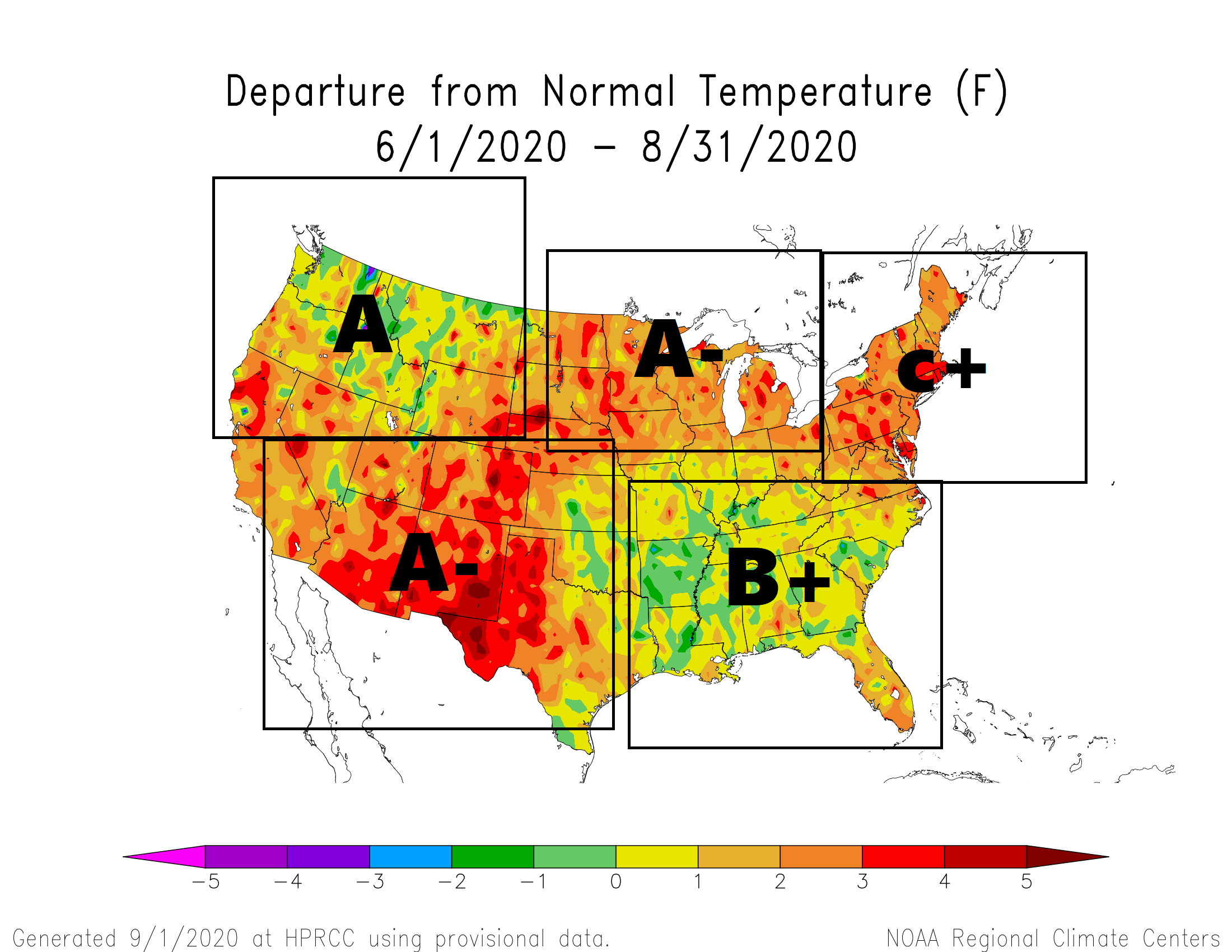
Temperature departures throughout the United States coincided fairly well with the predictions. The least veracious/accurate region of the country was the Northeast US, wherein the magnitude of the temperature anomalies turned out greater than forecasted. Correct side of departure (Warm) was foreseen, but the summer ended up quite a bit warmer than expected in the Northeast US. As to precipitation, the idea that most of the country would have normal to below normal precipitation, except for the Southeast and portions of the Northeast, was accurate. Overall, the forecast was a good one, with some flaws.
The Northeast US temperature departures are most heavily weighted in verification.
Thus, given the temperature departures of +2 to +3 in the NYC-NJ region, and precipitation departures near normal (dry to the E/N of NYC and wet to the S/W of NYC), the final grade for summer 2020 is B-. This will be considered a hit. It was a "fair" call.